
Colour analysis
Why do you look tired in every photo? (It is not your sleep)
 Ragini Tripathi · 21 September 2026 · 4 min read · Comments
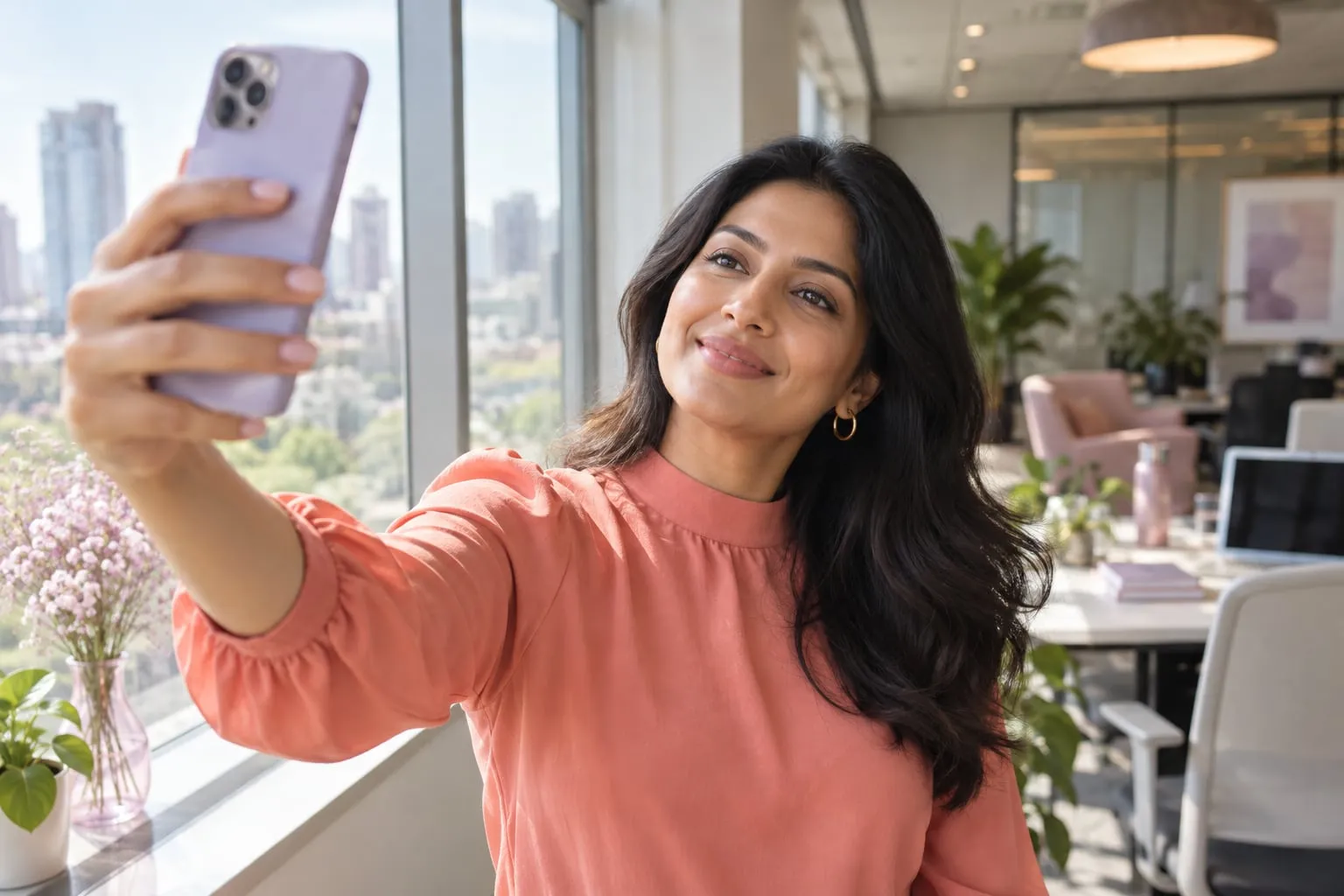
You slept eight hours. You drank your water and did your skincare. Then the office group photo lands on WhatsApp, and there you are: dull, drained and somehow older than you felt that morning. You zoom in, looking for what went wrong.
Here is what nobody tells you. Very often, the problem is not your face. It is the contrast around it.
The science of looking “fresh”
Researchers call it facial contrast: the difference in colour and brightness between your features (eyes, brows, lips) and the skin around them. A 2013 study found that aspects of facial contrast decrease as we age, and that the same face looked younger when its contrast was increased and older when it was reduced.
This is not only true of one ethnicity. A 2017 follow-up measured Chinese, Latin American and black South African women aged 20 to 80 and found the same pattern. Raters from France and China saw faces with more contrast as younger.
The researchers also noted something every woman who has ever applied kajal already knows: makeup works partly because it raises facial contrast.
Quick question: think of your favourite photo of yourself. What were you wearing close to your face? Keep that picture in mind.
Where your clothes come in
The colour sitting under your chin either supports your natural contrast or fights it. I see this in every draping session.
- If your colouring is soft and blended, harsh black next to your face overpowers you. Your features recede, and the shadows under your eyes look deeper.
- If your colouring is deep and high-contrast, dusty beige and muddy khaki blur your features. Your face looks flat, not calm.
- If your undertone is warm, icy greys can make the skin look grey. If it is cool, mustard can make it look sallow.
None of this changes your face. It changes what the camera does with it.
Three more photo thieves
The camera is too close. A 2018 study in JAMA Facial Plastic Surgery found that a selfie taken about 30 cm from the face makes the base of the nose look roughly 30% wider than a photo taken from 1.5 metres. Your face is not wider. The lens is simply too close.
The light is coming from above. Office tube lights and ceiling bulbs throw shadows straight down into your eye sockets. That is the “tired” look, and it has nothing to do with sleep.
You are staring at yourself all day. Researchers now study “Zoom dysmorphia”, the discomfort people feel after hours of watching their own face on video calls. The more you inspect a small, badly lit version of yourself, the more flaws you find.
Try this now: stand facing a window, switch to your back camera and take two photos from arm’s length, one in black and one in a colour you love. Look only at your face. Which one looks rested?
Your five-minute photo fix
- Put your best colour near your face. A top, scarf, dupatta or collar in your palette does more than any filter.
- Define your features. A little kajal, groomed brows and a lip colour in your shade restore the contrast that makes a face look awake.
- Face the light. Turn towards a window or lamp instead of standing under a ceiling light.
- Move the camera back. Hold it at eye level, step back and zoom in slightly instead of shooting close.
- Hide self-view on long video calls. You will stop fixing your face and start focusing on the conversation.
If you take one thing from this
You probably do not look tired. Your colours, your light and your camera might. Fix those three, and the photo starts to look like the person you see in the mirror on a good day.
Tell me in the comments below: when do you look most tired in photos, at work, on video calls or at family functions? And if you want to know exactly which colours give your face its contrast back, that is what a colour analysis session is for.
Research behind this post: Porcheron, Mauger & Russell (2013), PLOS ONE; Porcheron et al. (2017), Frontiers in Psychology; Ward et al. (2018), JAMA Facial Plastic Surgery; Mosalanejad et al. (2024), BMC Medical Education.
Your turn
When do you look most tired in photos: at work, on video calls or at family functions?
Share your experience or ask me a question. No login needed. I read every comment and reply to as many as I can.