
Menswear
Fit before fabric: the 12 suit and workwear rules every Indian professional should know
 Ragini Tripathi · 2 October 2026 · 5 min read · Comments
Most men’s style advice is written for London winters and New York boardrooms. Here are the rules that matter, from menswear’s classic reference books and from the research, translated for a Mumbai monsoon, a Delhi June and a Bengaluru stand-up.
Fit
-
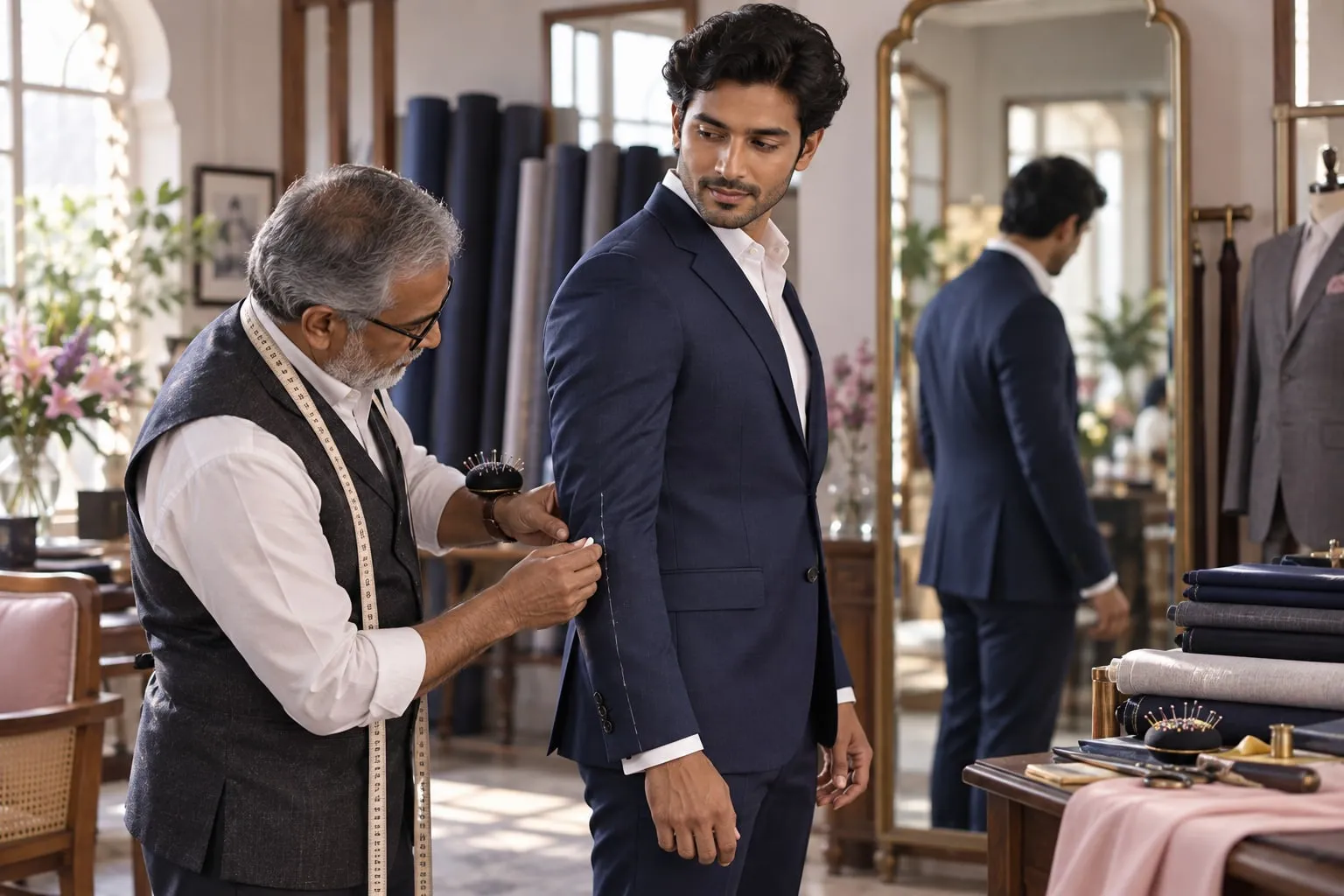
Shoulders first. The jacket’s shoulder seam should end at your shoulder bone. A tailor can shorten sleeves and take in a waist, but can barely touch shoulders, so this is the one thing to get right in the shop.
-
Check jacket length against your proportions. Covering the seat is a useful starting point. Alan Flusser cautions that an overly long jacket can shorten the visual leg line, but the right length depends on your build and the cut.
-
Show a little cuff. One to two centimetres of shirt cuff below the jacket sleeve. It frames the hand and makes the arm look longer.
-
Trousers on the waist. Not under the stomach. A waistband pushed below the belly shortens the legs, opens the pleats and adds years. If the waist is tight, size up and let the tailor adjust.
-
Alter what needs altering. Flusser argues that ready-made suits often benefit from adjustment. In a first-impression study, a man in a better-fitting suit was perceived as more successful and higher-earning in under five seconds. Ask a local tailor for a quote before buying a replacement.
Quick question: when did you last take a new shirt or suit to a tailor before wearing it?
Colour
-
Start with a versatile neutral. Charcoal or navy can both work for a first suit; compare each against your face and your actual work and event calendar. Mid-grey and dark brown can follow if they fit your wardrobe. Black may suit formal evening occasions.
-
Compare contrast near your face. Try a white and a blue shirt under the same dark jacket in daylight, then try a softer tonal combination. Notice which brings your features into focus. Dark hair, deep skin or an olive tone cannot by themselves determine your best shirt colour; a colour analysis helps you compare in person.
-
Socks follow trousers, belt follows shoes. Navy socks with a navy suit, charcoal with grey. The belt matches the shoes in colour and finish, so never a brown belt with black shoes. Dark brown shoes are as refined as black and look more modern with navy.
Details
-
The four-in-hand knot. It’s slim, slightly asymmetrical and suits most collars and faces better than the bulky Windsor. Tie it tight, with a small dimple under the knot, pushed up into the collar. The tip should reach the belt buckle.
-
Collar for your face. A round face looks best in longer, straighter collar points; a long, narrow face in a spread collar; a short neck in a lower collar. The collar is the frame for your face, so it matters more than the shirt’s pattern.
Indian heat and Indian offices
- Dress for the climate, not the catalogue. Choose tropical-weight wool, wool-mohair blends (crisp and crease-resistant), cotton-linen and linen blends, and unlined or half-lined jackets. Plain polyester absorbs almost no moisture (about 0.4% against 8.5% for cotton), which is why it feels sticky and smells sooner in Indian heat. In 2026, slightly relaxed shirts with straight-leg trousers look sharper than skinny fits that cling in humidity.
For business casual, a navy or charcoal unstructured jacket over a light shirt and chinos keeps your authority without the suit. Keep long sleeves (rolled is fine); they look more professional than short sleeves. Make sure the collar stands up without a tie: button-down or collar-band shirts hold their shape, while flimsy spread collars collapse.
- Dress for the room. For an interview, learn the organisation’s dress code and choose a thoughtful version of it. A jacket or tie you can remove gives you flexibility. Professional appearance can influence first impressions, but it does not replace preparation or competence.
For weddings and receptions
A quick word, because Indian men attend more formal events in a year than most Western men do in five. A bandhgala in a dark, matte fabric is our most elegant formal option, and it follows the same rules as a suit: shoulders that fit, a length that covers the seat, trousers that break slightly on the shoe. For a Western black-tie reception, a dinner jacket has peak or shawl lapels, never the notch lapels of a business suit. Midnight blue looks richer than black under artificial light, and an ivory jacket is perfectly correct in the heat.
An honest note
Some of these rules are backed by research (fit, formality and appearance change how competent a man looks). Others are decades of tailoring wisdom, which I’m comfortable calling good taste rather than science. Both matter. Neither replaces knowing your own proportions and colours.
If you take one thing from this
Fit before fabric, colour before brand, and the waist before the belly. Get those three right and a ₹15,000 suit will look better than a ₹1,50,000 one that doesn’t fit.
If you’d like these ideas applied to your body and colouring, Shape Your Presence is my three-session men’s programme on proportions, fit and colour layering.
Sources
Flusser (2002), Dressing the Man, HarperCollins; Howlett et al. (2013), Journal of Fashion Marketing and Management; Martín-Raugh et al. (2022), Journal of Organizational Behavior; ASTM D1909, standard moisture regain of textile fibres.
Your turn
Tell me in the comments: which of these rules was news to you?
Share your experience or ask me a question. No login needed. I read every comment and reply to as many as I can.